|
|||||||||||||||
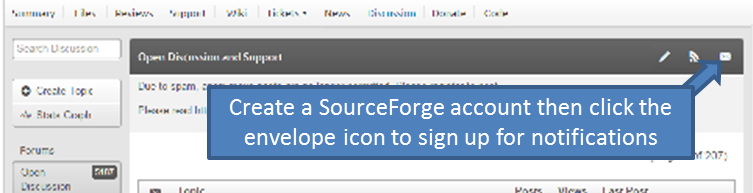
FreeRTOS Support ArchiveThe FreeRTOS support forum is used to obtain active support directly from Real Time Engineers Ltd. In return for using our top quality software and services for free, we request you play fair and do your bit to help others too! Sign up to receive notifications of new support topics then help where you can.
Loading
FreeRTOS tasks can interrupt USB stack implementation?Posted by ddudas on September 24, 2015 Hi all, I'm using ST's CubeMX implementation on a F4 discovery board. I use ST's USB middlewares with FreeRTOS. When I get a special OutputReport from PC side I have to answer nearly immediately (in 10-15 ms). Currently I cannot achieve this timing and it seems my high priority tasks can interrupt the USB callback. What do you think, is it possible? Because it's generated code I'm not sure but can I increase the priority of the USB interrupt (if there is any)? Thank you, David FreeRTOS tasks can interrupt USB stack implementation?Posted by rtel on September 24, 2015 10 to 15 ms is very slow, so I'm sure its possible. Where is the USB callback function called from? If it is an interrupt then it cannot be interrupted by high priority RTOS tasks. Any non interrupt code (whether you are using an RTOS or not) can only run if no interrupts are running. Without knowing the control flow in your application its hard to know what to suggest. How is the OutputReport communicated to you? By an interrupt, a message from another task, or some other way? FreeRTOS tasks can interrupt USB stack implementation?Posted by ddudas on September 24, 2015 The callback which receive the data from PC is called from the OTGFSIRQHandler (it's the part of the HALPCDIRQHandler function). I think the problem is SysTickHandler's priority is higher than OTGFSIRQHandler and it's cannot be modified, but the scheduler shouldn't interrupt the OTGFSIRQHandler with any task handled by the scheduler. Am I wrong that the scheduler can interrupt the OTGFS_IRQHandler? FreeRTOS tasks can interrupt USB stack implementation?Posted by rtel on September 24, 2015 Skynet Cccam 〈1080p 2027〉By understanding the inner workings of Skynet CCCAM and the implications of card sharing, we can better appreciate the importance of combatting these illicit activities. As technology continues to advance and new challenges emerge, it is crucial that we remain vigilant and work together to protect the integrity of the satellite TV industry and the creative content it provides. The Skynet CCCAM system operates by connecting to a network of servers and receivers that facilitate the sharing of CCcam subscriptions. These subscriptions are often obtained through illicit means, such as stolen or hacked legitimate subscription cards. Once connected to the Skynet CCCAM network, users can access a wide range of satellite TV channels, often without the need for a legitimate subscription. Skynet CCCAM is a term associated with a specific type of card sharing system. "Skynet" is a nod to the 1984 sci-fi movie "The Terminator," which featured a fictional AI system known as Skynet that became self-aware and began to destroy humanity. In the context of CCcam, Skynet refers to a sophisticated network or system used for sharing CCcam subscriptions. Skynet Cccam Skynet CCCAM represents a significant threat to the satellite TV industry and content creators. While the allure of free or low-cost access to premium channels may be tempting, the risks and implications of using such systems cannot be overstated. As the industry continues to evolve and adapt to the challenges posed by Skynet CCCAM and card sharing, it is essential for consumers to prioritize legitimate subscription-based services and support content creators. The fight against Skynet CCCAM and card sharing involves a multi-faceted approach. Broadcasters, content creators, and law enforcement agencies are working together to combat these illicit activities. By understanding the inner workings of Skynet CCCAM To grasp the concept of Skynet CCCAM, it's essential to understand the basics of CCcam and card sharing. CCcam, short for Card Control Message, is a protocol used for sharing digital television subscription cards over a network. This allows multiple users to access the same subscription channel or service using a single, legitimate subscription card. Card sharing, in the context of satellite TV, involves the sharing of a legitimate subscription card among multiple users. This is achieved through a network of receivers and servers, which enable the distribution of the decryption signals required to access encrypted channels. While card sharing can be used for legitimate purposes, such as sharing a subscription among family members or in a multi-unit dwelling, it is often exploited for illicit activities. "Skynet" is a nod to the 1984 sci-fi In the world of satellite television and internet connectivity, piracy and illegal streaming have become a significant concern. One term that has been making rounds in the dark corners of the internet is "Skynet CCCAM." For those unfamiliar with the term, Skynet CCCAM refers to a type of card sharing or CCcam (Card Control Message) system used to illegally share satellite TV subscriptions. In this article, we will delve into the world of Skynet CCCAM, exploring its functionality, implications, and the measures being taken to combat such illicit activities. FreeRTOS tasks can interrupt USB stack implementation?Posted by ddudas on September 24, 2015 Thank you for the answer, I think I'm a bit confused with the Cortex ISR priorities :-) What I can observe is if I use a much higher osDelay in my high priority task I can respond for the received USB message much faster. This is why I think tasks can mess up with my OTG interrupt.
Copyright (C) Amazon Web Services, Inc. or its affiliates. All rights reserved.
|
|||||||||||||||



NXP tweet showing LPC5500 (ARMv8-M Cortex-M33) running FreeRTOS.
Meet Richard Barry and learn about running FreeRTOS on RISC-V at FOSDEM 2019
Version 10.1.1 of the FreeRTOS kernel is available for immediate download. MIT licensed.
View a recording of the "OTA Update Security and Reliability" webinar, presented by TI and AWS.
FreeRTOS and other embedded software careers at AWS.