epanet-js

Richmond 5v40-7 Water Heater Specs Direct

No installs. No forced cloud storage. Just fast, local-first water modeling — powered by the engine you already trust.

The EPANET user's dilemma

  • Classic EPANET is powerful — but clunky and outdated. Workarounds become your workflow — slow and cumbersome.
  • Big-name platforms look polished, but they're overpriced and bloated with features you don't need to analyze your network quickly.
  • Modern browser-based tools exist — but they force your data into the cloud, raising privacy and compliance concerns. Plus, they offer little for those doing long-term planning and analysis.

You shouldn't have to choose between speed, security, and affordability just to understand your water networks.

Old EPANET UI
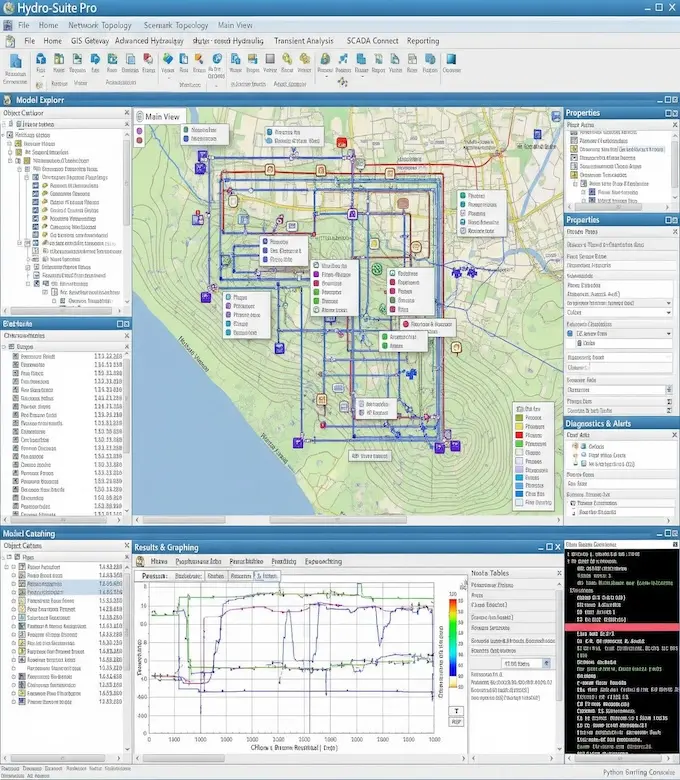
Complex Modeling App

Richmond 5v40-7 Water Heater Specs Direct

The 5V40-7 uses a single anode rod integrated into the hot water outlet nipple. 2. Performance: BTU and Recovery Rate With a 38,000 BTU/hr natural gas burner , the 5V40-7 is considered a standard-efficiency unit. Its recovery rate is 35.1 gallons per hour (GPH) with a 90°F temperature rise (e.g., raising groundwater from 50°F to 140°F).

When searching for "richmond 5v40-7 water heater specs" again, bookmark this guide. Whether you are comparing models, replacing a failed unit, or ordering parts, these specifications give you the hard data needed to make a smart decision. Disclaimer: Specifications are based on published manufacturer data and field manuals as of the article’s publication. Always consult the physical rating plate on your water heater and the installation manual for model-specific details. richmond 5v40-7 water heater specs

| Specification | Detail | | --- | --- | | | 5V40-7 | | Tank Capacity | 40 Gallons | | Energy Source | Natural Gas | | Vent Type | Atmospheric (Natural Draft) | | BTU Input | 38,000 BTU/hr | | First Hour Rating | 67 Gallons | | Recovery Rate | 35.1 GPH (at 90°F rise) | | Energy Factor (EF) | 0.59 (Standard) | | Tank Material | Glass-lined steel | | Anode Rod | Magnesium (sacrificial) | | Gas Valve Type | Honeywell electronic ignition | | Ignition System | Piezo spark pilot | | Dimensions (H x W x D) | 58" x 18" x 18" (approx.) | | Vent Pipe Diameter | 3 inches | | Gas Connection | 1/2" NPT | | Water Connections | 3/4" NPT (dielectric) | | Weight (Empty) | 119 lbs | | Weight (Full) | ~453 lbs | | Warranty | 6-Year limited (tank & parts) | Detailed Review of Richmond 5V40-7 Specs 1. Tank Construction & Durability The tank is constructed from heavy-gauge steel and coated with porcelain-like glass lining . This glass lining protects the steel from direct contact with water, preventing rust. However, because glass can develop microscopic cracks over time, the unit includes a sacrificial magnesium anode rod . The anode rod corrodes in place of the tank, and periodic inspection/replacement is critical for longevity. The 5V40-7 uses a single anode rod integrated

When it comes to reliable, budget-friendly residential water heating, the Richmond brand—exclusively sold at Menards®—has carved out a strong reputation. Among its most popular models is the Richmond 5V40-7 . If you are searching for "richmond 5v40-7 water heater specs," you likely own this unit, are looking to purchase one, or need to troubleshoot an existing installation. Its recovery rate is 35

Model water networks instantly.

No setup or downloads — just instant access right in your browser.

Start modeling now

EPANET deserves better — and so do you.

EPANET was a gift to the industry — free, open-source water modeling for all. But commercial vendors built on it, locked away improvements, and left the community behind.

epanet-js is our answer: a faster, simpler, affordable water modeling tool that protects your privacy and sustains the open-source future of water modeling.

We're proud to be part of the next chapter — and we're just getting started.

EPA logo
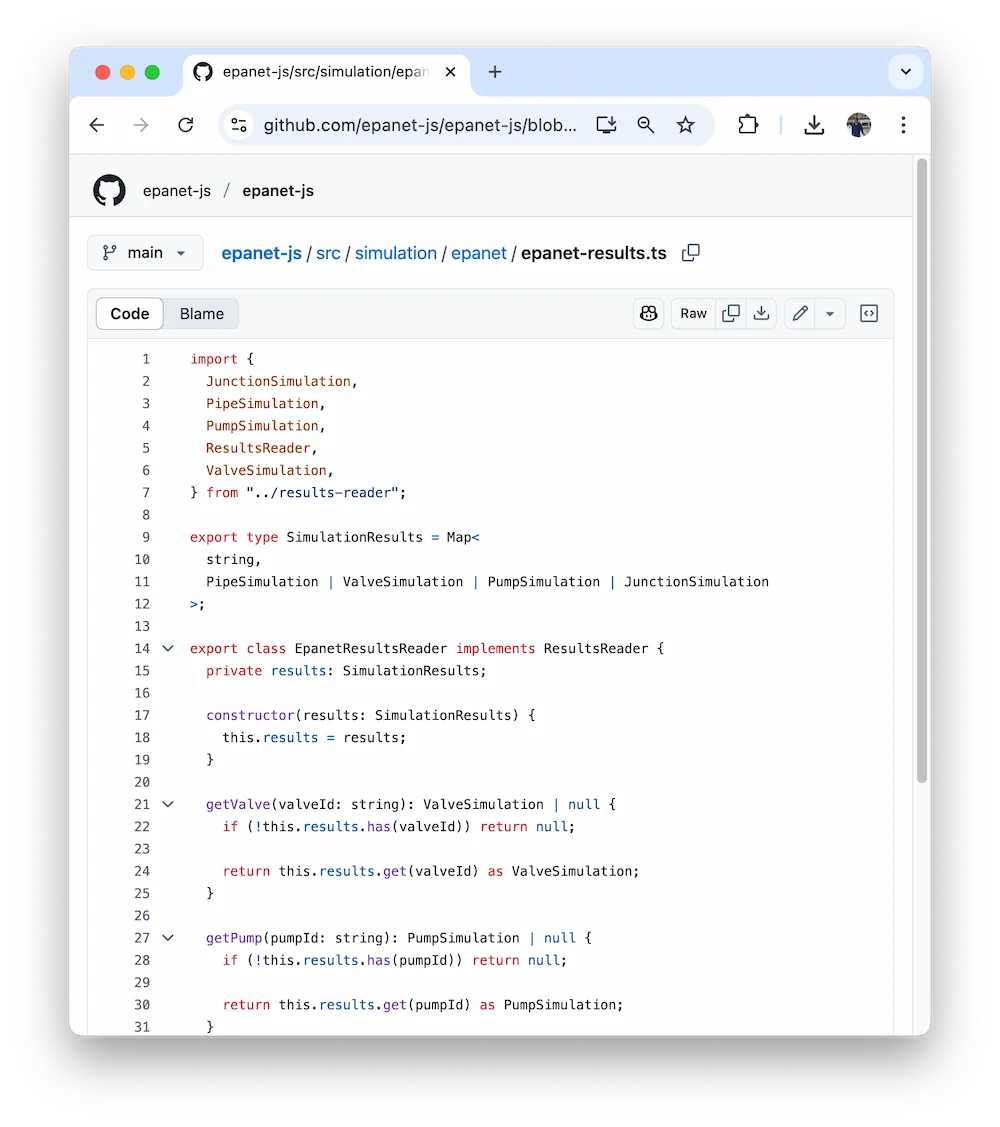
Source code of epanet-js on GitHub

When you support epanet-js, you support EPANET.

When you purchase more features in epanet-js, you're investing in the future of open-source EPANET development.

Our open-source model balances innovation and accessibility:

Anyone can build on our code. The two-year commercial-use delay gives us the incentive to keep pushing forward — and that fuels progress for everyone.

That means when you support us, you support more affordable hydraulic modeling software for the entire community.

Simple, transparent pricing for every kind of modeler.

Choose the plan that works for you

Free

For everyone.$0 /year

  • Web based EPANET model
  • Background maps and satellite
  • Automated Elevations
  • No limits on sizes
  • Community Support

ProMost popular

For solo modelers and small utilities.$950 /year

Individual named license

Everything in free, and:
  • Scenarios
  • Professional support
  • Custom layers
Coming soon:
  • Cloud storage
  • Point in time restore - 30 days
  • Demand Analysis

Teams

For teams that build together.$2500 /year

Floating shared license

Everything in Pro, and:
  • Priority support
  • Volume discounts
  • Pay by invoice
Coming soon:
  • Team storage
  • Point in time restore - 90 days
  • Sharing of networks

Have questions? or book a call.

Special access for personal and educational use

Available for non-commercial projects, learning, and student work.

Personal

$100/year

For curious minds and personal growth.

Everything in pro, but:
  • Community support only
  • Non-commercial usage

Education

$0/year

Free for students and teachers.

Everything in pro, but:
  • Community support only
  • Non-commercial usage

Frequently asked questions

Find answers to common questions about epanet-js.

Just open your browser and model.

No install. No login. No cloud required.

Launch epanet-js now

You may not know this, but for decades, the U.S. EPA has given the water industry an extraordinary gift: the free and open-source hydraulic modeling software EPANET. Odds are, if you've used any commercial hydraulic modeling software today, it was built on the EPANET engine.

The problem is, instead of giving back to their open-source roots like other industries do, big-name software vendors took EPANET's open code, built private tools on top of the engine, and then locked those improvements behind patents and proprietary licenses.

Some vendors even pressured the EPA to focus only on the engine — discouraging any effort to improve the interface or user experience for everyone else.

Those vendors now charge you exorbitant prices to use their software while EPANET lags behind — and utilities, engineers, and educators with smaller budgets suffer.

We think this is backwards — and we're on a mission to change it. We're focused on creating a better experience for the entire hydraulic modeling community.

That's why we built epanet-js under an FSL license — because we want to give you an affordable, easy-to-use water modeling option that creates a sustainable future for open-source EPANET development.

Support EPANET by using software that supports it back.
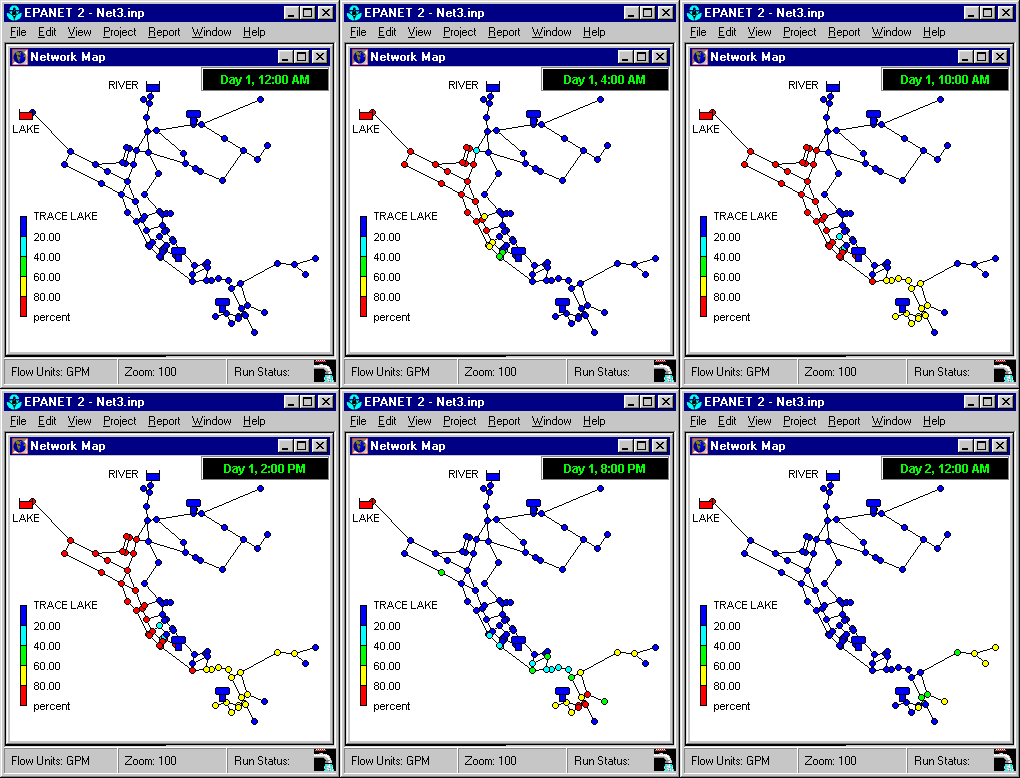
A better future for water modeling.

Simple, quick, and useful right out of the gate — designed to open-and-go.

Launch epanet-js now