Enhanced/Dual Powered
Willem EPROM Programmer
User Guide
Main Board / Cables
Main Board PCB3.5
Main Board PCB4E

Main Board PCB5.0

Main Board PCB5.5C

|
Parallel Data Cable (Printer extension cable, with male-female 25 pin connector, and pin to pin through) |
A-A type USB cable(for power) |
|
|
|
Optional Items:
|
ATMEL 89 Adapter |
ATMEL PLCC 44 Adapter |
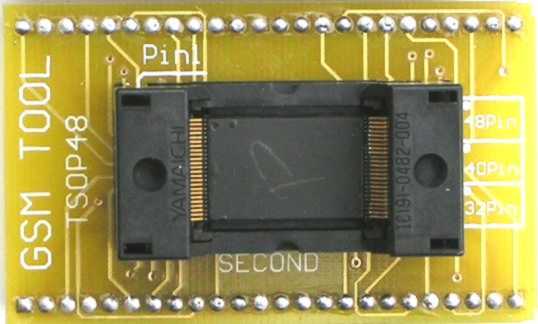
TSOP 48 Adapter |
|
|
|
|
|
FWH/HUB PLCC32Adapter |
PLCC32 Adapter |
SOIC Adapter(Simplified) |
|
On-Board |
On-Board |
|
|
AC or DC Power Adapter (9V or 12V, 200mA) |
SOIC Adapter(Professional) |
|
|
|
|
|
In many Asian cultures, the relationship between a son-in-law (menantu) and his parents-in-law (mertua) is often complex and multifaceted. This dynamic can be particularly intriguing when a son-in-law develops a close bond with his parents-in-law, often referred to as "Menantu Sange Pada Mertua" in Indonesian. A recent example that has garnered attention is the case of Aimi Yoshikawa, a Japanese woman whose husband, Andre, has been open about his affection for his parents-in-law.
The phenomenon of "Menantu Sange Pada Mertua" highlights the complexities of family relationships, particularly in Asian cultures. The case of Aimi Yoshikawa and her husband Andre serves as an example of how a close bond between a son-in-law and his parents-in-law can be beneficial for all parties involved. By understanding the cultural significance and benefits of such a relationship, we can foster more harmonious and supportive family environments. Menantu Sange Pada Mertua Aimi Yoshikawa
Aimi Yoshikawa, a Japanese woman, has been making headlines in Indonesia and Japan due to her husband's unusual relationship with her parents. Andre, Aimi's husband, has been vocal about his admiration and affection for his parents-in-law, often expressing his gratitude for their support and guidance. Aimi, in turn, has been understanding and supportive of her husband's feelings, acknowledging the positive impact her parents have had on their relationship. In many Asian cultures, the relationship between a
The term "Menantu Sange Pada Mertua" roughly translates to a son-in-law who is extremely close to his parents-in-law, often to the point of being overly affectionate or attached. This phenomenon can be observed in various cultural contexts, where the boundaries between family members become blurred. While it may seem unusual to outsiders, this type of relationship can be beneficial for all parties involved, fostering a sense of unity and cooperation within the family. The phenomenon of "Menantu Sange Pada Mertua" highlights
In many Asian cultures, the relationship between a son-in-law and his parents-in-law is influenced by Confucian values, which emphasize respect, loyalty, and filial piety. The concept of "Menantu Sange Pada Mertua" can be seen as an extension of these values, where the son-in-law prioritizes building a strong bond with his parents-in-law to ensure harmony within the family.
Hardware Installation & Configuration
|
Installation Steps
(Note: the LPT port of PC MUST set to ECP or ECP+EPP during BIOS setup. To enter the BIOS setting mode, you need press "Del" key or "F1" key during the computer selftest, which is the moment of computer just power up.)
Software Version To Use | |||
| |||
|
| |||
|
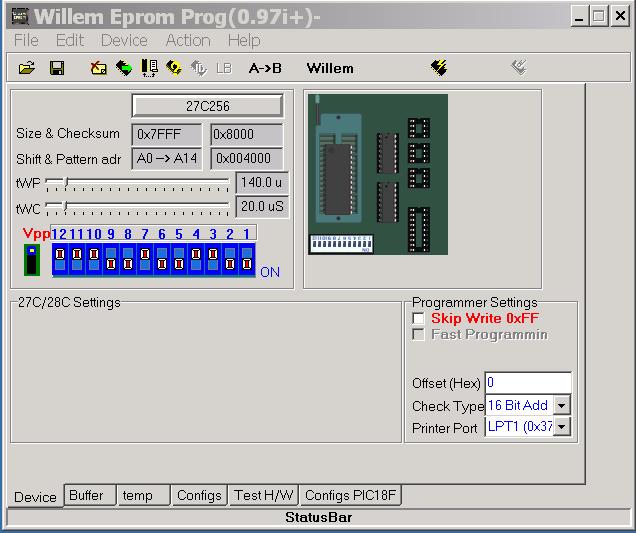
The software interface:
| |||
|
| |||
|
Hardware
Check
| |||
|
PCB3.5/PCB4E
PCB5.0
PCB5.5C
Note: the Vcc setting jumper only has effect when you are using AC adaptor as power source. For the USB power only 5V Vcc is available. For the PCB5.5C, set DIP steps: 1. press DIP Set button twice to check current DIP bit position. Then set it again for ON or OFF. 2. press DIP Bit shift button to shift the DIP bit position to where need to set. And then press DIP Set button twice to check current DIP bit position. Then set it again for ON or OFF. 3. Repeat those steps till all DIP bit ae set same as software indicated. For PCB5.5C voltage and Special chip selection: 1. Put back the safety jumper. 2. Press the voltage button and hold for 1 second, the voltage LED should move to next. Repeat till desired voltage LED light up. 3. Press the chip selection button and hold for 1 second, the chip LED should move to next. Repeat till desired LED light up. 4. Remove the safety jumper to lock the selected voltage and chip selection
DIP Switch (PCB3.5, PCB5.0)
When programming one chip, follow the program prompt to set DIP switch .
|
In many Asian cultures, the relationship between a son-in-law (menantu) and his parents-in-law (mertua) is often complex and multifaceted. This dynamic can be particularly intriguing when a son-in-law develops a close bond with his parents-in-law, often referred to as "Menantu Sange Pada Mertua" in Indonesian. A recent example that has garnered attention is the case of Aimi Yoshikawa, a Japanese woman whose husband, Andre, has been open about his affection for his parents-in-law.
The phenomenon of "Menantu Sange Pada Mertua" highlights the complexities of family relationships, particularly in Asian cultures. The case of Aimi Yoshikawa and her husband Andre serves as an example of how a close bond between a son-in-law and his parents-in-law can be beneficial for all parties involved. By understanding the cultural significance and benefits of such a relationship, we can foster more harmonious and supportive family environments.
Aimi Yoshikawa, a Japanese woman, has been making headlines in Indonesia and Japan due to her husband's unusual relationship with her parents. Andre, Aimi's husband, has been vocal about his admiration and affection for his parents-in-law, often expressing his gratitude for their support and guidance. Aimi, in turn, has been understanding and supportive of her husband's feelings, acknowledging the positive impact her parents have had on their relationship.
The term "Menantu Sange Pada Mertua" roughly translates to a son-in-law who is extremely close to his parents-in-law, often to the point of being overly affectionate or attached. This phenomenon can be observed in various cultural contexts, where the boundaries between family members become blurred. While it may seem unusual to outsiders, this type of relationship can be beneficial for all parties involved, fostering a sense of unity and cooperation within the family.
In many Asian cultures, the relationship between a son-in-law and his parents-in-law is influenced by Confucian values, which emphasize respect, loyalty, and filial piety. The concept of "Menantu Sange Pada Mertua" can be seen as an extension of these values, where the son-in-law prioritizes building a strong bond with his parents-in-law to ensure harmony within the family.