We collect cookies to better configure the services of the website. By consenting, you allow us to obtain anonymised statistical data. More information can be found here. Thank you!
Ryan Keating zve na film Svatý pavouk
For many consumers of hentai—particularly in Western countries—there remains a stigma around anime-style adult content. A smartphone is a private device. Reading a hentai romance on a phone during a commute or before bed feels discreet compared to leaving a manga on a coffee table or browsing a desktop site with a visible history.
These stories are designed for short, dopamine-driven bursts. A user can complete an entire "scene" (5–10 minutes) while waiting for coffee. The vertical, scrollable format is optimized for one-handed use, making it the ultimate low-friction experience. These stories are designed for short, dopamine-driven bursts
It is the fusion of the oldest art form (storytelling) with the newest technology (mobile, freemium, interactive apps), filtered through the visual language of anime. For millions of readers worldwide, their smartphone is not just a communication device; it is a portal to a parallel universe where love is always intense, passion is beautifully illustrated, and the next chapter is always just one tap away. It is the fusion of the oldest art
Whether you view it as an artistic frontier, a psychological escape, or a predatory industry, its influence on both digital art and modern romance tropes is undeniable. The stories are here to stay—evolving, branching, and scrolling endlessly into the future. Are you over 18? Tap to continue. In the last decade
In the last decade, the landscape of adult entertainment has undergone a quiet revolution. It has moved from passive visual consumption to active, narrative-driven engagement. At the intersection of this shift lies a rapidly growing niche: Mobile Hentai romantic fiction and stories.
While male readers gravitate toward harem or "power fantasy" hentai, These readers grew up watching anime like Sailor Moon or Fruits Basket , then migrated to fanfiction sites like Archive of Our Own (AO3). Mobile hentai romance is the natural evolution of that fandom—professional, visually stunning, and catering specifically to the female gaze.

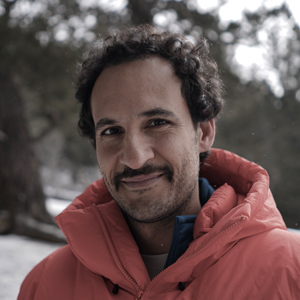
Ali Abbasi is a writer and director. He was born 1981 in Iran and left his studies in Tehran to move to Stockholm, where he graduated with a BA in architecture. He then studied directing at the National Film School of Denmark, graduating with his short film M FOR MARKUS in 2011. His feature debut, SHELLEY premiered at the Berlinale in 2016 and was released in the US. He is best known for his 2018 film BORDER, which premiered in Cannes, where it won the Prix Un Certain Regard. The film was chosen as Sweden’s Academy Award® Entry, was widely released internationally, won the Danish Film Award and was nominated for three European Film Awards including Best Director, Best Screenwriter & Best Film. He is currently shooting the TV adaptation of “The Last of Us” for HBO in Canada.
Watch Ali Abbasi's movie Border on Edisonline.