Okinawa-kenpo is a karate style which has been developed based on ancient Okinawan martial arts called "Ti". Its technique and thought were studied and refined by a Tomari-te master, Shinkichi Kuniyoshi (also known as "BUSHI" Kuniyoshi) and passed down to Grand Master Shigeru Nakamura, the founder of Okinawa-kenpo. Grand Master Nakamura opened his own dojo "Okinawa-kenpo Karate-do Shurenjo" at Onaka, Nago city and taught his art of karate.
Written in Japanese.
Japanese fonts required to view this contents
"Okinawa-kenpo" was founded by Grand Master Shigeru Nakamura in 1960 as an association of diverse dojos based on his belief "there is no Ryuha in Okinawa karate".
Participation to a competition in Kyushu as "The All Japan karate-do Federation, Okinawa District" was how it all started. Nakamura felt how strong Japanese karate organization was at the competition and worried about the future of Okinawa karate.
Then, he appealed to all karate-ka in Okinawa for participating to the movement of "Okinawa-kenpo".
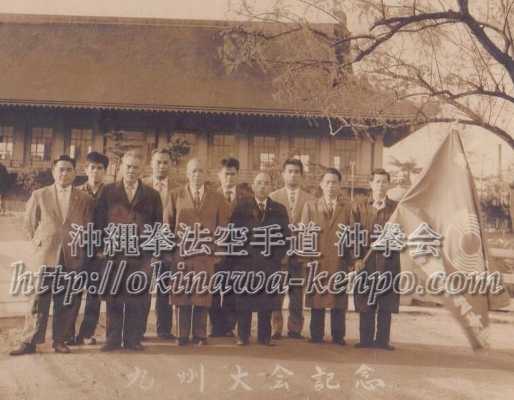
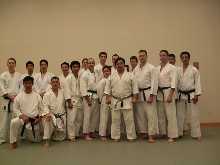
Upper row (left to right): 2nd from left, Komei Tsuha,Hiroshi Miyazato, Toshimitsu Kina
Bottom row (left to right): 2nd from left, Shigeru Nakamura, Shinsuke Kaneshima, Zenryo Shimabukuro
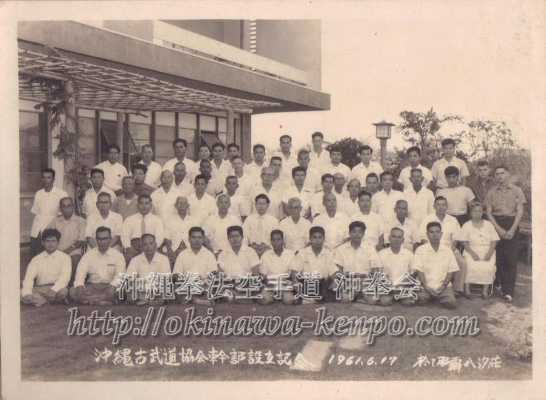
Upper row (left to right): (3rd from left) Kamaichi Nohara, Shinei Kaneshima, Tatsuo Shimabuku, (10th from left) Masami Chinen, Zenryo Shimabukuro
Middle row (left to right): (3rd from left) Shinei Kyan, Shosei Kina, Shinsuke Kaneshima, Seitoku Higa, (8th from left) Seiyu Nakasone, Kenko Nakaima
Bottom row (left to right): Hiroshi Miyazato, Komei Tsuha, (9th from left) Shigeru Nakamura, Joen Nakazato
In June 17, 1961, karate masters from all over Okinawa gathered at Yashio-so, Naha city. At this meeting, they had a discussion about the unification of Okinawa karate and finally came to endorse it (Establishing of Okinawa Kobudo Kyokai).
After Nakamura's passing, the group fell apart. However, Okinawa karate advanced to an era of great development.
Each karate style goes on its own way, and Okinawa-kenpo has become the name of the style which was taught and practiced by the students of Grand Master Nakamura.
Various Ryuha participated in the movement of "Okinawa-kenpo".
Mostly, they were from "The All Japan karate-do Federation, Okinawa District" and "Okinawa Kobudo Kyokai". Exchange of techniques was widely performed among them.
After the death of Nakamura, Okinawa-kenpo was divided into several groups.
Each group inherited Nakamura's will and techniques and developed Okinawa-kenpo in their own way.
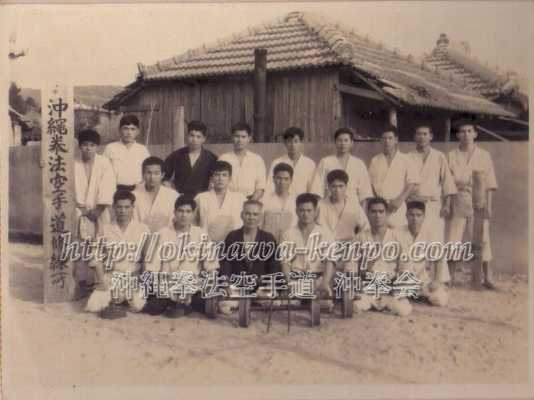
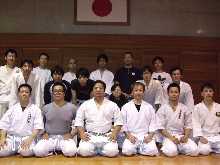
Bottom row, 3rd from left, Grand master Shigeru Nakamura, Shihan-dai Hiroshi Miyazatoo, Toshimitsu Kina
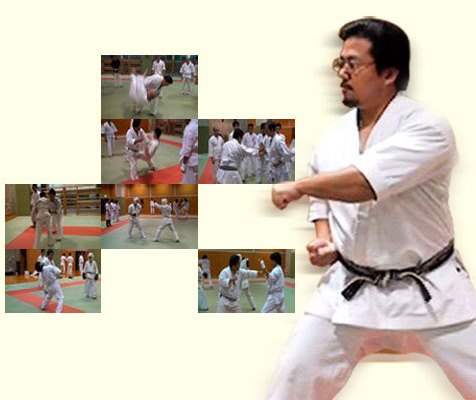
Old style karate techniques and training methods still remain in our system. We train with those methods, which are rarely seen in other Ryuha these days.
Tanren-hou (Training method)
Okinawa-sumo (traditional Okinawan wrestling)
Torite (grabbing)
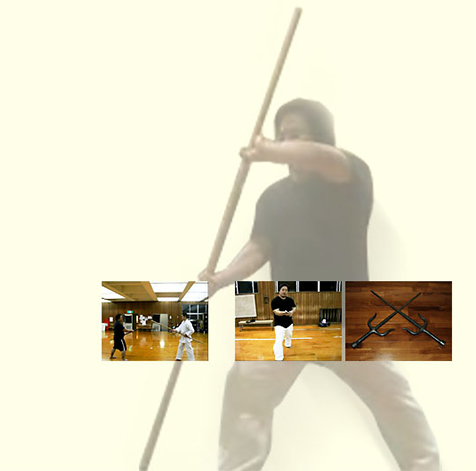
Buki-jutsu (weapons)
Our techniques, from empty hands to weapons,are incorporated in a coherent system and consist of common basic skills.
Historically, Okinawa-kenpo inherited various Kata.
The following is a list of kata which are practiced at Okinawa-kenpo Karate-do, Oki-ken-kai
Karate
Weapons
Yet, a curious paradox defines the current era of popular media: despite the overwhelming flood of options, audiences report feeling more disconnected, bored, and "empty" after consuming content than ever before. The issue isn't a lack of entertainment—it is a lack of .
Here is a practical checklist for identifying extra quality entertainment content: Extra quality content rarely disappears. If a film, game, or series is still being discussed, analyzed, or meme'd six months after its release, it has passed the quality test. Popular media fades; quality endures. 2. Follow the Creators, Not the IP Instead of trusting Marvel or Netflix, trust specific showrunners, directors, or writers. If Mike Flanagan ( The Haunting of Hill House ) makes it, you watch it. If Hiro Murai directs a music video, you click it. In the age of extra quality, the auteur is the brand. 3. The "Skip Intro" Test This is a simple heuristic. If you find yourself instinctively skipping the intro sequence of a show, it might not be extra quality. Truly great shows ( The White Lotus , Game of Thrones , Peacemaker ) craft intros that are themselves works of art—integral to the mood and impossible to skip. The Economics of Quality: Why Platforms Are Finally Pivoting For a long time, the business case for extra quality entertainment content was weak. Streaming services realized they could keep subscribers with a "firehose" of mediocre originals. Why spend $20 million on a brilliant, risky screenplay when you can spend $2 million on a generic rom-com that the algorithm will push to 40 million people? Yet, a curious paradox defines the current era
Furthermore, the advertising market is bifurcating. Advertisers are realizing that 100,000 views on a deeply engaged, high-quality podcast are worth more than 10 million views on a hated, scrolled-past YouTube preroll. Attention is the true currency, and extra quality content commands premium attention. We cannot discuss entertainment standards without addressing the psychological impact. There is a growing body of research suggesting that low-quality, high-volume media consumption correlates with increased anxiety and decreased attention spans. It puts the brain in a constant state of novelty-seeking without satisfaction. If a film, game, or series is still
The algorithm wants you to consume. But to truly experience entertainment—to be moved, challenged, and changed—you need extra quality. The content exists. It is out there, buried under a mountain of sludge. Go find it. Watch intentionally. Listen deeply. And never settle for "good enough" again. What are your go-to sources for extra quality content? Share in the comments below (and yes, that is a genuine request—not just engagement bait). Follow the Creators, Not the IP Instead of
That math is breaking.
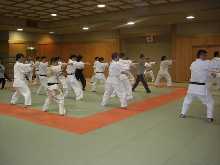
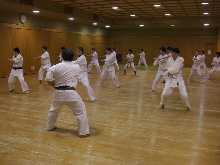
We, Okinawa-kenpo Karate-do Oki-Ken-Kai, work on in a unit called "Keiko-kai".
is a group of like-minded people to practice Okinawa-kenpo any time and anywhere.
Today, there are Keiko-kai in eight region Japan;
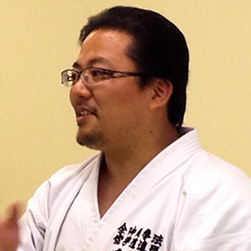
Shihan Yamashiro visits each Keiko-kai regularly, trains them, and conducts open seminars.


Shihan Yamashiro has been invited by masters of other styles, and conducted seminars regularly.


He started practicing karate when he was little with his father, Tatsuo Yamashiro, who inherited "Ti" from Hiroshi Miyazato.
He won 1st place at "All Okinawa Full Contact Fighting with Bogu Gear Tournament" in 1992 and 1993,
Written in Japanese.
Japanese fonts required to view this contents